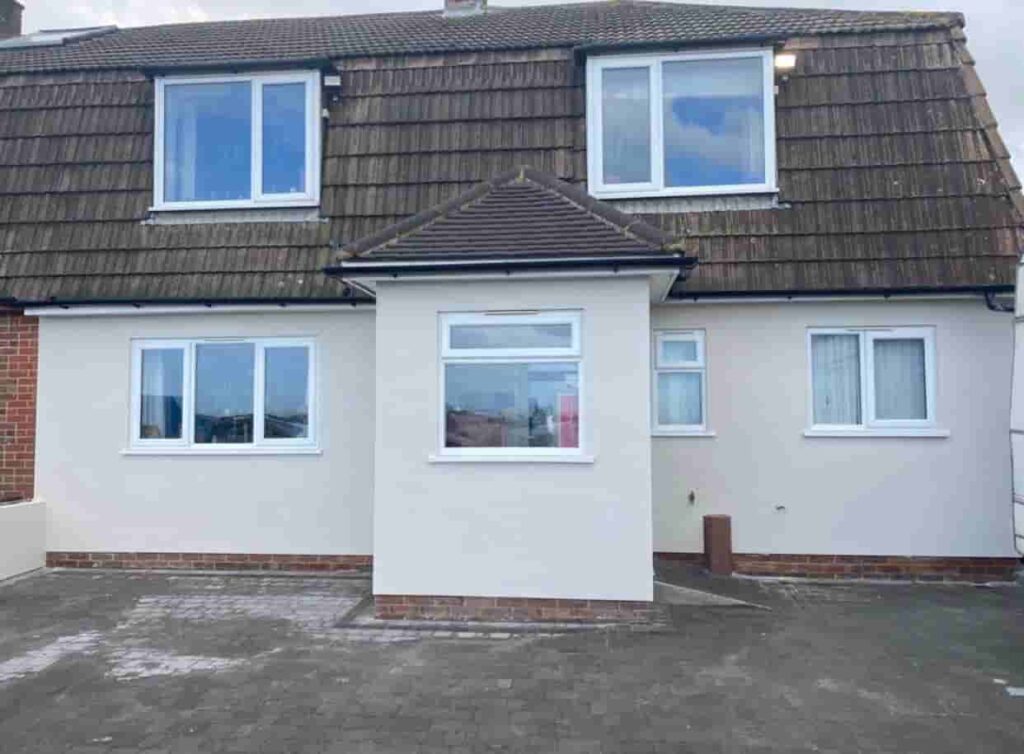
Roofing problems do not always appear one at a time. A homeowner may notice a slipped tile, deteriorating leadwork, a small internal damp patch and problems around the ridge within a relatively short period. When several defects are present, it can be difficult to know which one deserves attention first or whether they are actually connected.
For homeowners in Cambourne, Cambridgeshire, the priority should be to understand the condition of the roof as a complete system. The most visible defect is not necessarily the most important one. Identifying active water entry, unstable roofing materials and the underlying causes of repeated problems can help ensure that repairs are carried out in a sensible order.
Start With Problems That Are Allowing Water Into the Property
Active water ingress should be one of the first concerns when assessing several roof defects.
Even a relatively small leak indicates that the roof’s weather-resistant covering has been compromised somewhere. The visible damp patch inside the property may not reveal exactly where water is entering, because moisture can travel beneath tiles or along other components before becoming noticeable internally.
Potential sources can include:
- Broken or displaced tiles
- Deteriorated leadwork
- Defective roof junctions
- Problems around ridges or valleys
- Gaps created by movement or deterioration
- Damage affecting a particular section of roof covering
Rather than simply treating the internal symptom, the source of the water needs to be identified.
Prioritise Loose or Displaced Roofing Materials
A roof may contain defects that are not yet causing an obvious leak but still deserve prompt attention.
Loose, slipped or significantly damaged roofing materials can leave the surrounding roof more exposed. Movement can also affect neighbouring components, particularly during periods of strong wind and heavy rain.
A single slipped tile may remain an isolated repair if it is addressed appropriately. Leaving it unresolved can allow water to reach areas that were previously protected.
Where several tiles are moving or deteriorating, the wider section should be inspected to establish why the problem is occurring.
Do Not Assume Every Problem Is Separate
When a roof develops several defects around the same time, there may be an underlying connection.
For example, repeated tile movement across one section could indicate a wider problem affecting that area. Water entering around deteriorated leadwork may travel before appearing elsewhere inside the property. Multiple visible defects can also develop because several roofing components have reached a similar stage of deterioration.
This is why repairing each symptom independently is not always the best approach.
A professional roof assessment should ask whether the problems are genuinely unrelated or whether they form part of a wider pattern.
Look at the Cause, Not Just the Most Obvious Damage
Visible damage naturally attracts attention first.
However, replacing one broken tile will not solve a recurring problem if the surrounding section is also deteriorating. Likewise, repeatedly treating a leak will achieve little if the actual entry point has not been correctly identified.
Effective roof repairs should address the reason the defect developed wherever possible.
This involves considering questions such as:
Is the damage isolated?
One defective component surrounded by sound roofing may only require a local repair.
Are neighbouring materials deteriorating?
Several nearby defects can indicate that the problem extends beyond the most obvious damage.
Has the same area been repaired before?
Repeated failure in one location deserves closer investigation.
Are problems developing across different parts of the roof?
This can suggest that the overall condition needs to be considered rather than concentrating on one section.
Understanding the cause helps prevent attention being focused on the wrong issue.
Leadwork Problems Should Not Be Overlooked
Leadwork protects some of the most vulnerable junctions on a roof.
When it becomes cracked, distorted, loose or otherwise deteriorated, water can find its way into adjoining areas even when the main roof covering appears relatively sound.
This makes leadwork an important part of any assessment involving multiple roof problems.
If tiles are repaired but deteriorated leadwork nearby is ignored, water ingress may continue and give the impression that the original repair has failed.
All relevant roof junctions should therefore be considered as part of the wider inspection.
Check Whether Several Broken Tiles Indicate Wider Deterioration
Individual roof tiles can become damaged for various reasons, and replacing a small number of isolated tiles is a normal form of roof maintenance.
The situation changes when damaged tiles continue appearing.
If several tiles across the same roof are cracked, slipping or deteriorating, replacing them individually may deal with the immediate defects without explaining why the failures are becoming more frequent.
The surrounding covering should be assessed.
Where most tiles remain in good condition, targeted repairs may still be appropriate. Where deterioration is widespread, a larger section of roofing may require attention.
Recurring Leaks Need a Broader Investigation
One leak that is properly repaired and does not return is very different from water ingress that repeatedly reappears.
Persistent leaks can indicate that:
- The original entry point was not identified
- More than one defect exists
- Water is travelling beneath the roof covering
- A larger roof section has deteriorated
- A vulnerable junction requires more comprehensive attention
Repeatedly repairing the area where water becomes visible internally may therefore fail to solve the problem.
When leaks return, the priority should shift from another surface-level repair to understanding the wider cause.
Consider Which Defects Could Cause Further Deterioration
When several problems are present, it is useful to consider what could happen if each one is left unattended.
A cosmetic difference in the appearance of roofing materials may be relatively low priority compared with an opening that is actively admitting water.
Similarly, a loose component may deserve greater attention than an older but currently serviceable section.
The priority should generally be given to defects that are:
- Allowing water ingress
- Leaving the roof exposed
- Actively worsening
- Affecting surrounding materials
- Creating movement within adjoining roofing
- Indicating deterioration across a wider section
This helps direct attention towards maintaining the roof’s performance rather than simply improving how it looks.
Previous Repairs Can Provide Useful Clues
The repair history of a roof can tell you a great deal about its current condition.
One previous repair is rarely significant on its own. However, a roof that has accumulated numerous repaired sections can reveal a pattern.
Consider whether new problems are appearing:
- Around earlier repairs
- Across entirely different sections
- More frequently than they used to
- In several different roofing components
If repairs remain occasional and localised, continuing with targeted maintenance can make sense.
If defects are becoming widespread, it may be time to assess whether individual repairs are still addressing the roof effectively.
Should Every Defect Be Repaired at the Same Time?
Not necessarily, but the complete roof should ideally be assessed before deciding what work is required.
Some defects may be closely connected and best addressed together. Others may be independent and require different levels of attention.
A professional assessment can help establish which problems require immediate repair, which can be incorporated into the same work and whether any apparently minor defects indicate something more extensive.
This avoids making decisions based purely on whichever problem happens to be most visible.
When Do Several Problems Point Towards More Extensive Roofing Work?
Multiple roof defects do not automatically mean that a new roof is required.
A roof can have several repairable problems while still remaining fundamentally serviceable.
However, more extensive work becomes worth considering when the pattern indicates widespread deterioration.
Examples include:
- Numerous damaged tiles across several areas
- Repeated leaks from different sections
- Widespread deterioration around roof junctions
- Multiple previous repair patches
- Problems returning soon after repairs
- Different roofing components deteriorating together
- Large sections of covering becoming unreliable
At this point, the question is no longer simply how each individual defect can be repaired. It becomes necessary to consider the condition of the roof as a whole.
Repairing Sound Roofs Versus Replacing Deteriorated Sections
Good roofing work should be proportionate.
If most of the roof remains sound, there is little benefit in treating serviceable areas as though they have failed. Localised repairs can preserve existing roofing while correcting the actual defects.
Equally, repeatedly patching widespread deterioration may not provide the most appropriate solution.
Depending on what an inspection finds, the required work might involve:
- Individual roof repairs
- Repairs to several related components
- Renewal of a deteriorated section
- More comprehensive re-roofing
- Complete roof replacement where deterioration is widespread
The correct option depends on the extent and cause of the problems rather than simply the number of visible defects.
Why Professional Diagnosis Matters
A homeowner can often identify that something is wrong with a roof, but determining how different problems relate to one another requires roofing experience.
At Cambourne Roofing Repairs, we provide professional roofing services throughout Cambourne, Cambridgeshire, with an emphasis on identifying the cause and extent of roof deterioration before deciding on the appropriate work.
Assessing the whole roof can establish whether several defects require separate repairs or whether they are symptoms of a common underlying problem.
This diagnostic approach is particularly valuable when a property has already undergone previous repairs but new issues continue to develop.
What Should You Tell Your Roofer?
Providing information about the recent history of the roof can help with assessment.
Useful details include:
- Where leaks have appeared internally
- When problems are most noticeable
- Which areas have previously been repaired
- Whether tiles have repeatedly slipped
- How long visible defects have been present
- Whether problems have recently become more frequent
Even details that seem unrelated can help build a clearer picture of how the roof is performing.
Avoid Waiting for Every Small Problem to Become Serious
When several minor defects exist, it can be tempting to postpone action until one becomes more disruptive.
The difficulty is that roofing problems can interact.
A small opening can allow moisture beneath the covering. A loose tile can expose adjoining areas. Deteriorated leadwork can affect roofing that otherwise remains sound.
Addressing problems while they remain manageable provides an opportunity to protect unaffected sections rather than waiting for deterioration to spread.
Roofing Repairs in Cambourne
For homeowners in Cambourne, Cambridgeshire, dealing with multiple roof defects begins with establishing priorities based on condition rather than appearance.
Cambourne Roofing Repairs can assess damaged tiles, leaks, leadwork, junctions and other roofing concerns as part of the wider roof rather than treating each symptom in isolation.
Where repairs remain appropriate, targeted work can help preserve serviceable roofing. Where several problems indicate broader deterioration, a more comprehensive solution can be considered.
The important point is that the recommendation should reflect what the property actually needs.
Conclusion
When your roof has several different problems, the priority should be identifying which defects are affecting its ability to keep the property protected and whether those defects are connected.
Active leaks, loose roofing materials and deteriorated weatherproof junctions deserve particular attention. At the same time, repeated repairs, multiple damaged areas and recurring water ingress can indicate that the problem extends beyond individual defects.
For homeowners in Cambourne, Cambridgeshire, Cambourne Roofing Repairs provides professional roof assessment and repair services designed to identify the underlying cause of roofing problems. If several issues have started appearing across your roof, contact our team to arrange an assessment and determine which areas should be addressed first.
Call us on: 01954 776 277
Click here to find out more about Cambourne Roofing Repairs
Click here to complete our contact form and see how we can help with your roofing needs.